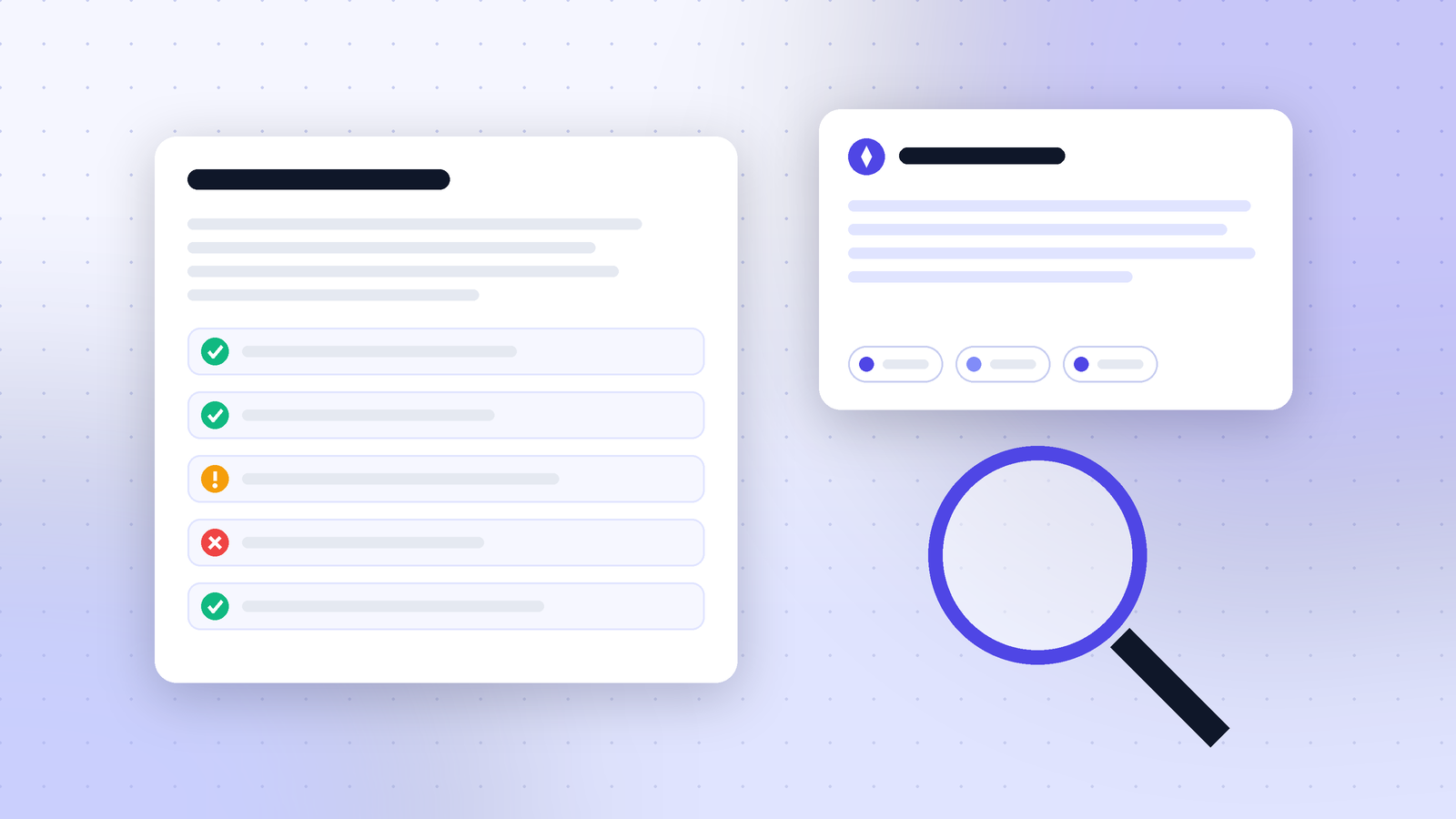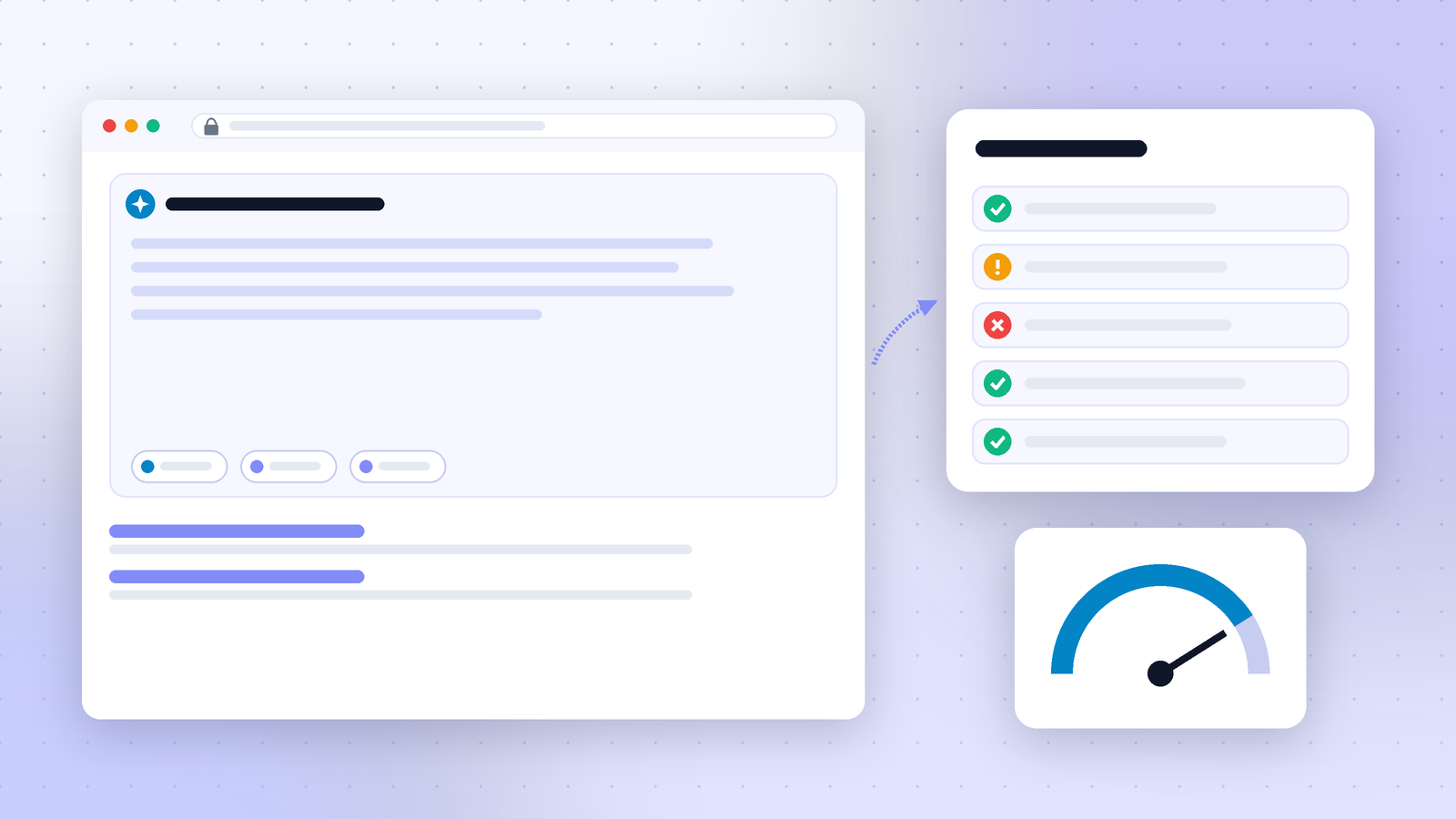
Microsoft Bing has added a new view to the AI Performance report in Bing Webmaster Tools. It is called Topics Portfolio, and it is in beta. Instead of showing your AI citations one query at a time, it groups them into topics. It also shows how big each topic is, how many other sites compete in it, and which queries you are missing.1
Two terms first. A citation is when an AI answer links to your page as a source. A grounding query is the search phrase the AI used behind the scenes to find content for its answer. Bing's report is built on those two things.
What Bing announced on October 13, 2026
The announcement was posted on the Bing Webmaster Blog on October 13, 2026, by Krishna Madhavan, Saral Nigam and Vivek Jain.1 It opens like this:
"Today we are announcing a new beta feature inside the AI Performance report in Bing Webmaster Tools."
Source: Bing Webmaster Blog, October 13, 2026.1
The post says the feature "groups the grounding queries where your site appears into broader thematic clusters". It also says "Everything in this view is personalized to your site."1
To find it, you sign in to Bing Webmaster Tools and open AI Performance. If Bing has enough data for your site, a Topics Portfolio tab appears next to the Citations & Pages view.1 You can look at a one, two or three month window.1
The four columns, in plain words
The main table lists your topics, with four columns. Here is what Bing says each one means.
| Column | Bing's definition | What it tells you |
|---|---|---|
| Topic | "A broad thematic cluster of related grounding queries where your site appears." | A theme you already show up in, such as a product area or subject. |
| Topic Size | "The approximate total citations across all sites for this topic over the selected period" | How much AI answer activity the topic has. Bing calls it "a measure of how much AI Search demand the topic represents." |
| Sites Cited | "The approximate number of sites appearing for queries in this topic, which indicates how crowded the topic is." | How many competitors share the citations. |
| Queries | "The approximate number of distinct grounding queries in this topic." | How many different search phrases sit inside the topic. |
All definitions quoted from the Bing Webmaster Blog, October 13, 2026.1
Notice that Topic Size counts citations for all sites, not just yours. That gives you a sense of the whole market around each topic.
Top Opportunity Queries
Below the topic table is a list Bing calls Top Opportunity Queries. Bing describes these as "the strongest queries across your whole portfolio where other sites appear and yours does not."1
In other words, these are gaps. AI answers for these queries cite someone, but not you. Bing adds that "Citation volumes there are shown as ranges rather than exact numbers."1 So you will see a band of citations, not a precise count.
Inside a topic
Click a topic and you get a detail page. At the top are three summary numbers: the Topic Size, your own citations within the topic, and the number of queries in it.1 Below that are two tables. Your Grounding Queries lists queries where you are already cited. Opportunity Queries lists ones where other sites are cited and you are not.
Bing sums it up this way: "Together they give you the two halves of a topic: what you already own, and what is still open."1
What is confirmed and what is only reported
CONFIRMED, by Bing directly:
- Topics Portfolio is a beta feature inside the AI Performance report.1
- The table has four columns: Topic, Topic Size, Sites Cited and Queries. All the numbers are approximate.1
- Opportunity query citation volumes are shown as ranges.1
- The tab only appears "If there is sufficient data for your site". Bing says smaller sites "may see a shorter list or may not even see this feature."1
- Topic labels are made by AI. Bing says "Topic classification is AI-generated and can occasionally be imperfect".1
- "Branded queries can appear as opportunity queries." That means a search for your own brand name could show up as a gap, even though it isn't a real one.1
REPORTED, not stated in the October post itself:
- No click data. Search Engine Roundtable wrote in its launch coverage: "No click data yet, sorry folks..."2 The Bing post itself does not mention clicks at all. Bing's earlier AI Performance launch post did not mention clicks either.3 Search Engine Land noted at that launch that Bing Webmaster Tools "still won't reveal how those citations translate into clicks, traffic, or any real business outcome."4
- Which AI surfaces are covered. The October post does not name Copilot. The February launch post says the report covers "Microsoft Copilot, AI-generated summaries in Bing, and select partner integrations."3 Topics Portfolio likely uses the same data, but the October post does not say so.
Don't mix up two launches. Bing already added a feature called Topics in June 2026, which grouped grounding queries into themes.5 Topics Portfolio is a separate, later announcement that adds the market view: Topic Size, Sites Cited and opportunity queries. The October post does not explain how the two relate. It even uses both names, telling readers to "select the Topics tab" in its setup steps.1
How we got here: a timeline
| Date | What happened |
|---|---|
| February 10, 2026 | Bing launches AI Performance in Bing Webmaster Tools as a public preview, showing citations, grounding queries and cited pages.3 |
| March 24, 2026 | Bing links the Grounding Queries and Pages views.6 |
| June 3, 2026 | Search Engine Roundtable reports Google is rolling out a Search Generative AI performance report in Search Console, at first for a small group of UK site owners. It shows impressions, not clicks.7 |
| June 16, 2026 | Bing adds four preview features to AI Performance: Intents, Topics, Citation Share and Compare.5 |
| August 31, 2026 | Google's help page says the generative AI insights had rolled out "to all websites worldwide" as of this date.8 |
| October 13, 2026 | Bing launches Topics Portfolio (beta) inside AI Performance.1 |
Does Google Search Console have anything like this?
Partly. Google Search Console now has a Generative AI performance report. Google's help page says it "shows data about how your site performs in generative AI features on Google Search." It covers AI Overviews and AI Mode.8
But it measures something different. Google's report counts impressions, which it defines as "how many times links to your site were shown to a user in a generative AI feature."8 It does not show clicks.7 Its help page lists no grounding queries, topic sizes or competitor counts.8
How to read Topics Portfolio: a worked example
This is an illustrative composite. The brand "Trailnest" is invented, and every number below is made up to show the method. None of it comes from real Bing data.
Say Trailnest sells outdoor gear. It opens Topics Portfolio, picks a three month window, and sees five topics. It copies its own citations from each topic's detail page into an extra column. Then it works out a rough share:
Rough share = your citations ÷ Topic Size
This is a homemade number, not a Bing metric. Bing has its own Citation Share metric, but that one works per query, not per topic.5
| Topic (illustrative) | Topic Size | Sites Cited | Queries | Trailnest citations | Rough share |
|---|---|---|---|---|---|
| Hiking boots | 12,000 | 340 | 85 | 1,500 | 12.5% |
| Tent care | 2,400 | 45 | 30 | 600 | 25% |
| Trail running shoes | 6,000 | 120 | 60 | 180 | 3% |
| Camping recipes | 9,000 | 900 | 120 | 90 | 1% |
| Avalanche safety | 1,200 | 60 | 18 | 20 | 1.7% |
For example, trail running shoes: 180 ÷ 6,000 = 0.03, which is 3%. Now Trailnest asks of each topic: is it big, is it crowded, and is our share already strong?
| Topic | Size | Crowding | Our share | What to do |
|---|---|---|---|---|
| Trail running shoes | Big | Fairly open (120 sites) | Low | Top priority. Real demand, fewer rivals, room to grow. |
| Hiking boots | Biggest | Crowded (340 sites) | Strong | Protect. Keep cited pages fresh and work its opportunity queries. |
| Tent care | Small | Open (45 sites) | Highest | Maintain. Already a big slice of a small topic. |
| Camping recipes | Big | Very crowded (900 sites) | Very low | Low priority. Very crowded and far from what Trailnest sells. |
| Avalanche safety | Small | Open (60 sites) | Low | Check first. Only worth it with real expertise, since safety content must be accurate. |
Next, Trailnest opens the trail running topic and reads the Opportunity Queries table. Say it sees "trail running shoes for wide feet" with a citation range of 100 to 500 (again, invented). AI answers for this query cite other sites, but not Trailnest. The range is wide, so Trailnest should not plan around the top of the band.
The fix is normal content work. If no Trailnest page clearly answers the question, it writes one. If a page exists, it may need a clearer answer near the top. Trailnest also skips any opportunity query containing its own brand name, since Bing warns these can appear by mistake.1
This order matches Bing's own advice. It suggests you "start with the topics where your citations are already concentrated" and "then work down the opportunity queries."1
The honest limits
Keep these limits in mind:
- It is one engine. The data comes from Bing. The February post names Microsoft Copilot, AI summaries in Bing and select partner integrations.3 It tells you nothing about ChatGPT, Gemini, Perplexity or Google's AI Overviews.
- Citations are not clicks. Being cited does not mean anyone visited your site. Click data is not available.2
- The numbers are approximate. Topic Size, Sites Cited and Queries are all approximate, and opportunity volumes are ranges.1 Bing says: "Treat the numbers as directional signals for planning, not as a precise ledger."1
- It is a beta. Topic labels come from AI and can be wrong. Branded queries can show up as false gaps.1
- Small sites may see little or nothing. The tab needs "sufficient data" to appear.1
- Topics only cover where you already appear. The topic table is built from grounding queries where your site shows up.1 A theme where you have zero citations will not appear as a topic at all.
Why this matters
Before this, Bing's competitive view worked one query at a time, through Citation Share. Topics Portfolio adds that context at the topic level, putting your citations next to the size of each topic and the number of rival sites. That makes it easier to choose where to spend content time.
Some questions are still open. Bing has not said when the beta ends, whether clicks will be added, or how the June Topics feature fits with Topics Portfolio. For now, it is a useful planning view for one AI engine, not a full picture of AI search.
See your topics across more than one AI engine
Topics Portfolio shows where Bing's AI cites you and where it doesn't. Your customers also ask ChatGPT, Gemini, Perplexity and Google AI Mode. Ripplix tracks which prompts mention and cite your brand across those engines, so you can spot the same kind of gaps in every one of them.
Get your free AI Visibility Report →
Sources:
- Bing Webmaster Blog: Introducing Topics Portfolio (Beta) in AI Performance (October 13, 2026)
- Search Engine Roundtable: Topics Portfolio In Bing Webmaster Tools AI Reports (October 13, 2026)
- Bing Webmaster Blog: Introducing AI Performance in Bing Webmaster Tools Public Preview (February 10, 2026)
- Search Engine Land: Bing Webmaster Tools officially adds AI Performance report (February 10, 2026)
- Bing Search Blog: New AI Visibility Insights in Bing Webmaster Tools: Intents, Topics, Citation Share, Compare (June 16, 2026)
- Search Engine Roundtable: Bing Webmaster Tools AI Performance Reports Add Grounding Queries To Pages (March 24, 2026)
- Search Engine Roundtable: Google Search Console AI Performance Report & AI Blocking Controls (Limited) (June 3, 2026)
- Google Search Console Help: Generative AI performance report (Search) (accessed October 14, 2026)