
User manual · 10
Prompt Discovery: your own keywords
The Your keywords box at the top of Prompt Discovery lets you name the searches you care about. Ripplix turns each one into questions a real person might ask an AI assistant.
A keyword is the short phrase people type into Google, such as "free crm". A prompt is the full question they ask AI, such as "What is the best free CRM for a small team?". You give the keyword, and Ripplix writes the prompts.
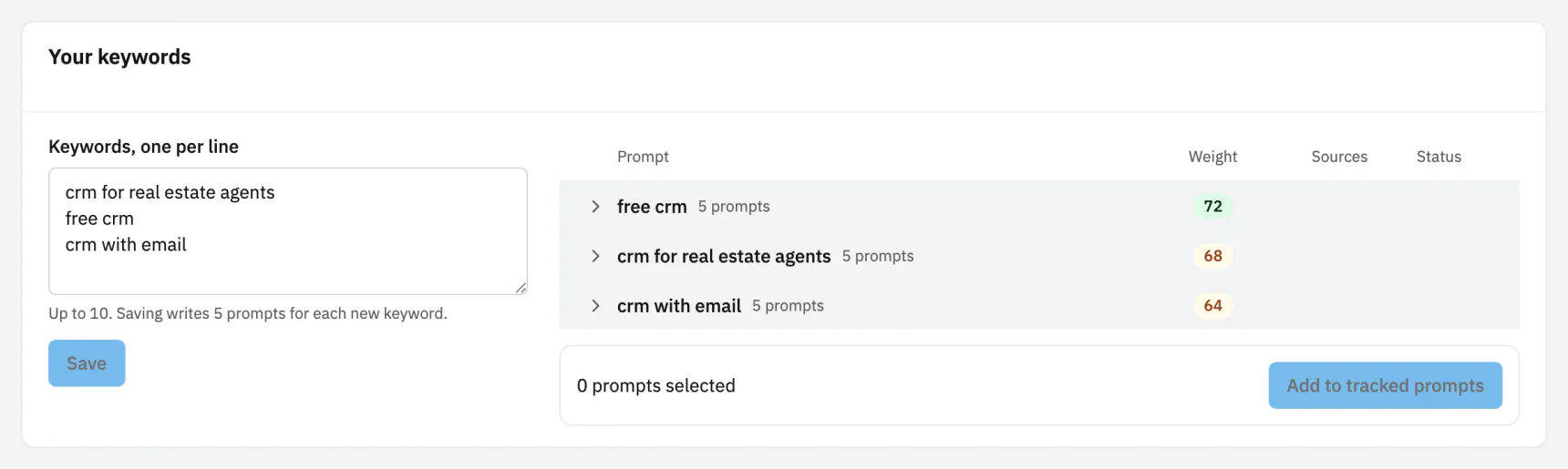
- Type one keyword per line, up to 10. Each can have up to 8 words and 80 characters.
- Press Save. Ripplix writes up to five questions for every new keyword. You can leave the page while it works.
- Open a keyword on the right, tick the questions you want, and press Add to tracked prompts.
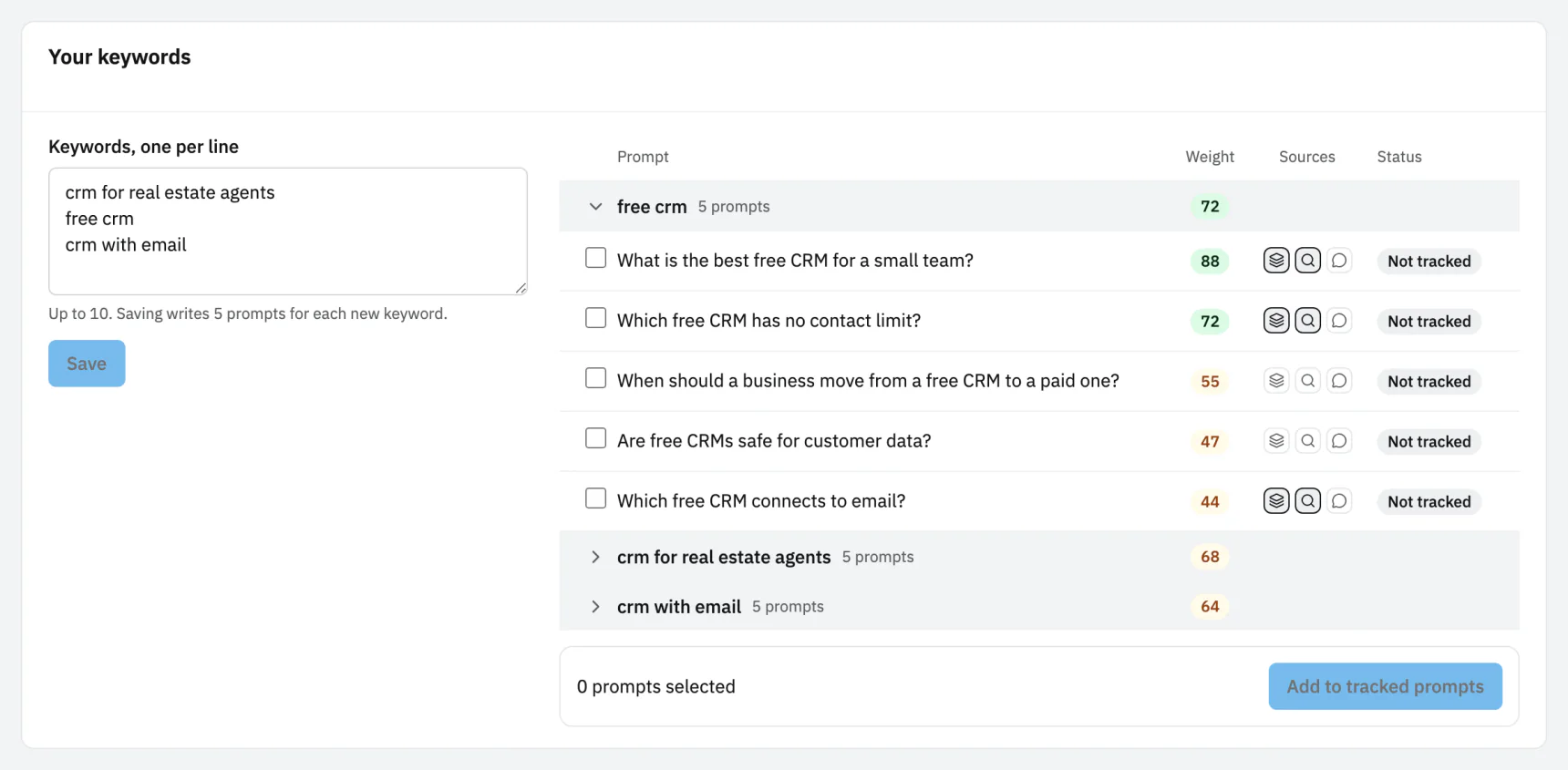
Each question has a Weight: how likely customers are to ask it, so a higher one matters more. Its Sources are the evidence that people really ask it, and Status says whether you track it yet.
- New keywords get their questions the next time you save or press Refresh. If one is waiting, the page says so under the box.
- Removing a keyword and pressing Save takes its questions off the list. Questions you already track stay tracked.
- The page's own Refresh, beside Export all prompts, writes everything again, your keywords' questions too, and uses credits. The Refresh in the top bar only reloads the screen.
- Changing the spelling of a keyword makes it a new one.
- These questions stay in this box. They are not in Discovered prompts, the counts, or any CSV.
Everyone on your team shares the same keywords for the brand. If the brand has never been refreshed, your first Save runs a full refresh, which uses credits. After that, only saving a new keyword uses credits; removing one, or saving with nothing new, uses none. Adding these questions to tracked prompts also uses a small amount, to tag them. If you are out of credits the keywords are still saved, and their questions are written once you top up and save again.